While we wait for improved internet (coming soon!) cool things are still happening at the studio. We just can’t show you. No wait – we can, here, via the Kiln Log!
A friend (the Amazing musician of Creature Rock, Michael Scott Parker) had a request with a hard deadline. We have a huge kiln I couldn’t fill in time to fire her little piece…
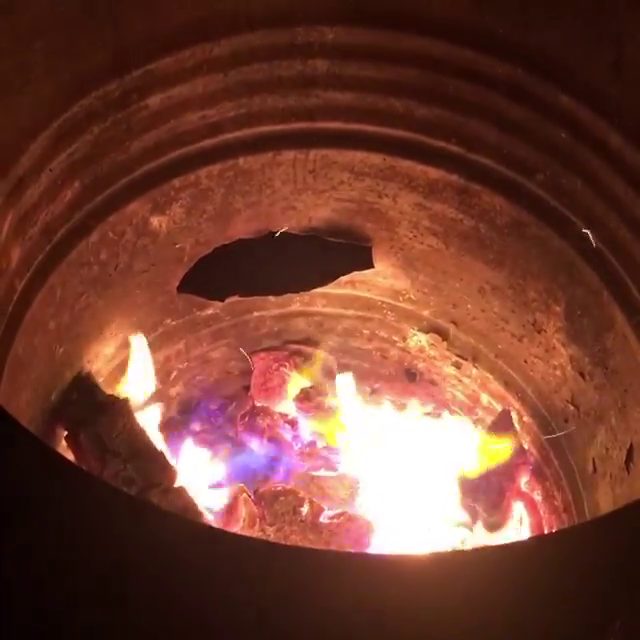
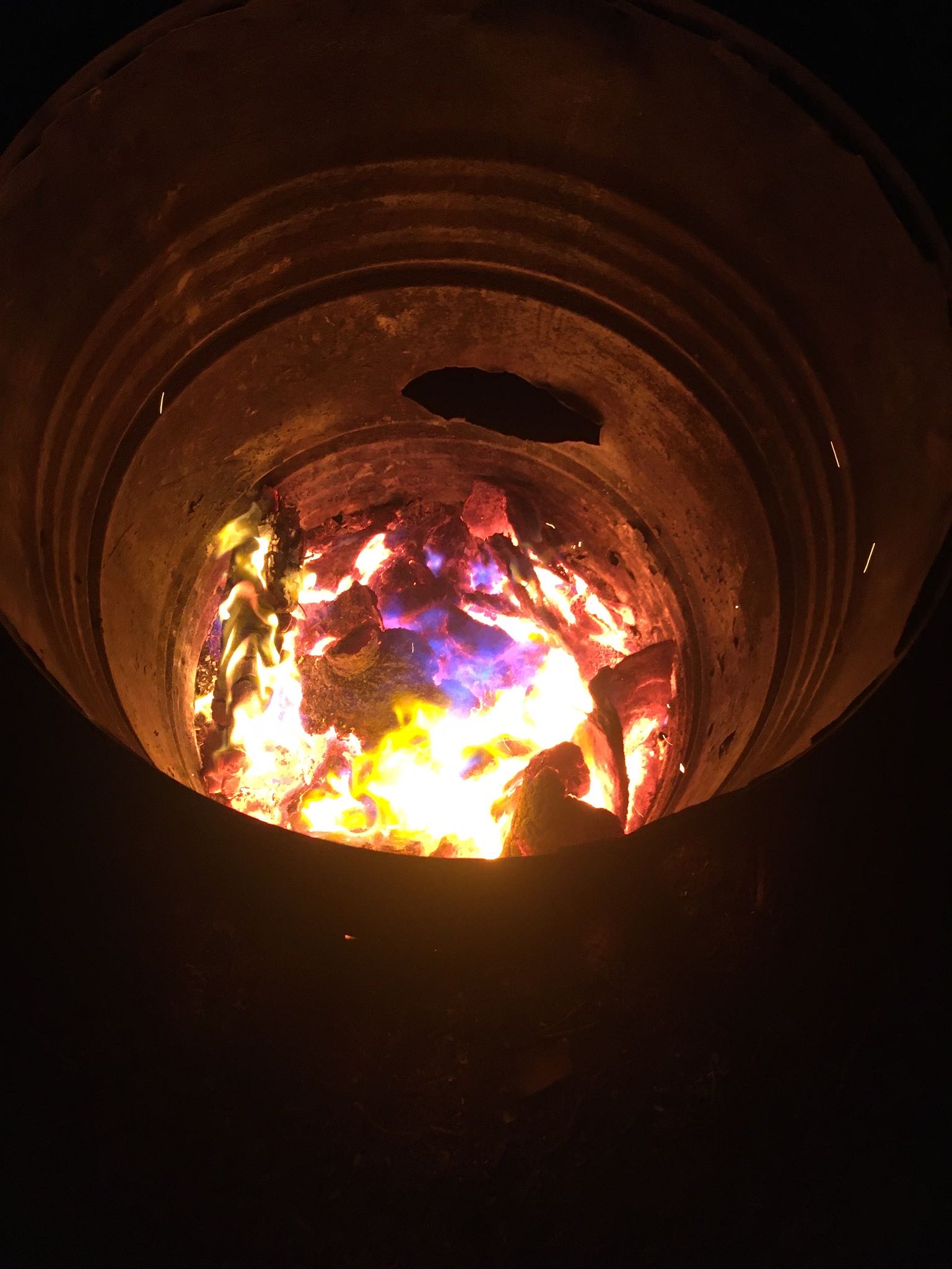
I’ve always loved pitfiring. The drama of the colourful flames, the magic of feeding the fire by night, and the joy of sifting through the ashes to unearth your treasures!
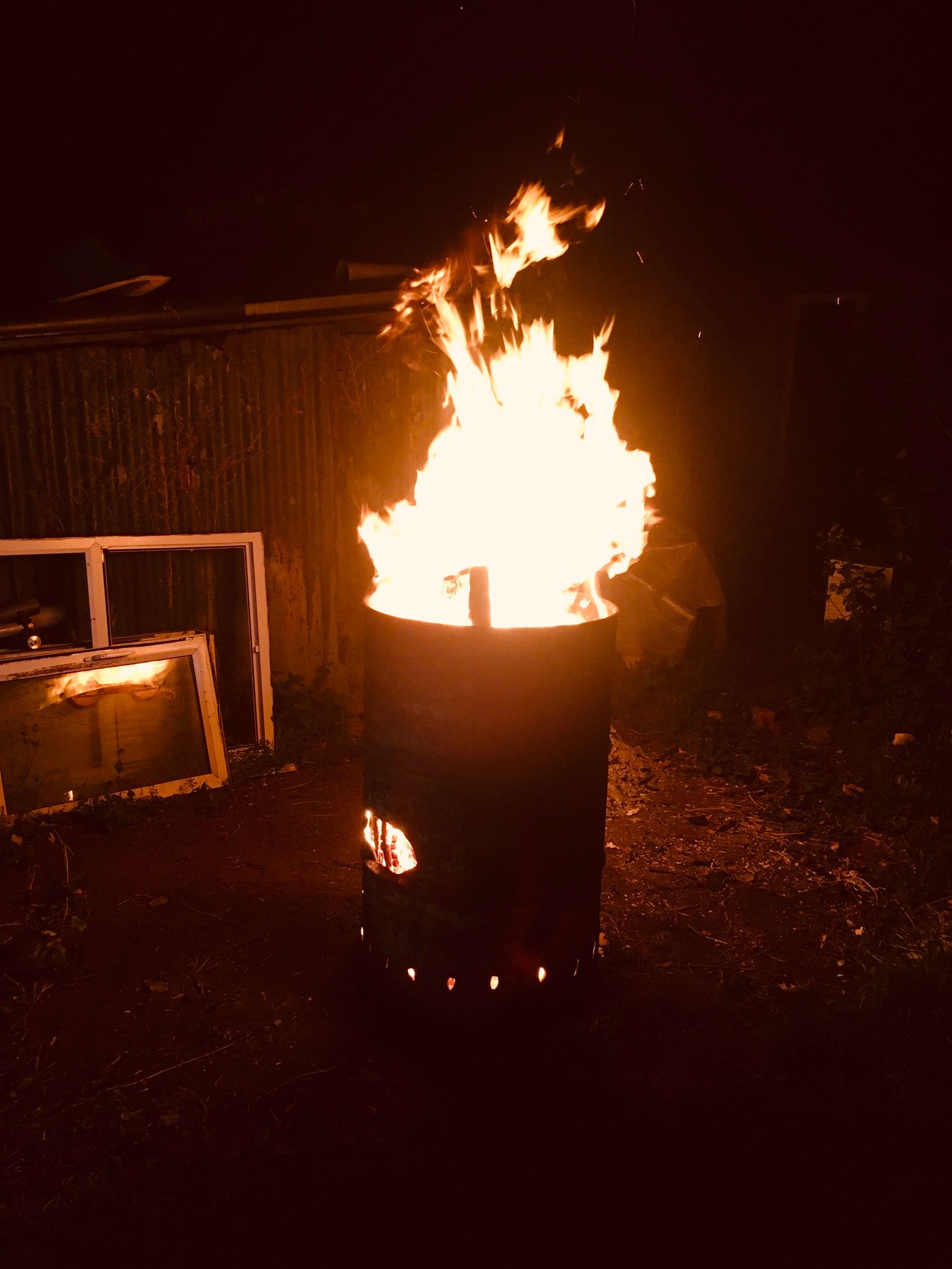
The handful of work I had ready, a full glaze firing would not make, but I _did_ happen to have two loose pallets, access to a steel barrel with holes poked in, and enough nonfunctional bisque to justify, hmm, maybe a small pitfiring?
Without access to all my books, I dived into online resources to prepare myself. I found Eduardo Lazo’s article on Ceramic Arts Network a handy reference, and more useful points on Up in Smoke’s website. Youtube is a great resource as well, for visual instruction on what to do (and what definitely NOT to).
We lined our receptacle’s walls with wood, and made a base layer of crumpled newspapers and cardboard, as we didn’t have any wood, seaweed, cowpats :-(, topped with wood, and then nestled in our pots, followed by more paper, cardboard, and topped to the brim with wood.
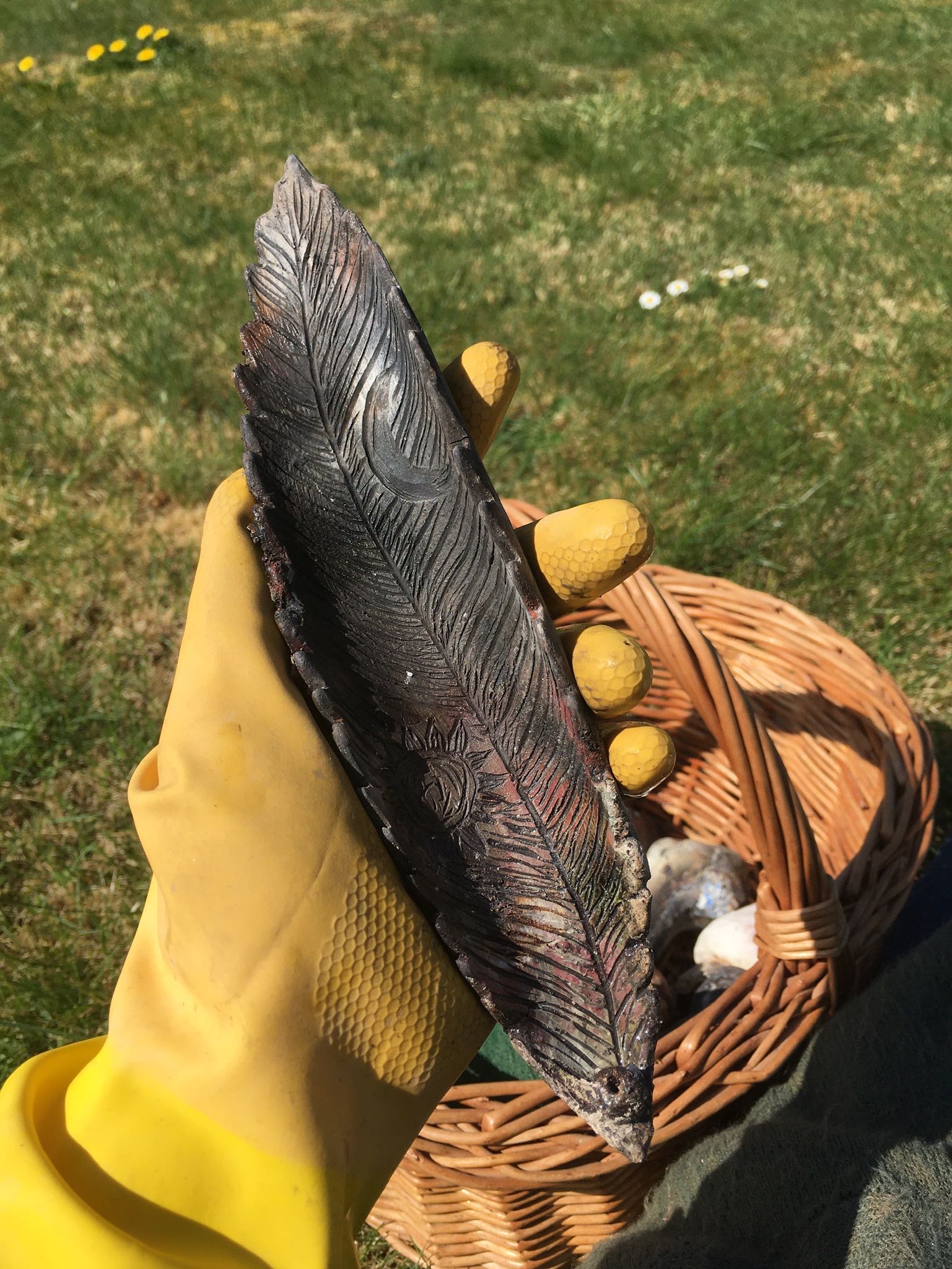
The pots, by the way, were a collection of rattles and feather incense burners. I used the studio’s usual standard terra cotta, and some pieces were layered with crisp white slip. I contemplated making a batch of Terra Sigilliata, but all my ball clay went to making slip this month, and we can’t just pop over to the suppliers for one little thing just now (shout out to Blue Matchbox and Bath Potter’s, who are being amazingly efficient, looking after us all by courier!).
Most of the pots (already bisqued) were wrapped in copper wire (I used copper kitchen scourers), and then dusted with copper and cobalt carbonate, and then wrapped up in aluminium foil saggars.
Ignition was at 9:15 pm, and the fire was left to die down, and then covered, around 11:30. I did stoke it a bit, to keep it turning over, but I might not next time – I’m generally happy with the pots, but they are very dark.
The next morning, we uncovered the drum, and fished the still warm pots out. I used a wire brush and scourer to remove ashy deposits, and will polish the finished products with microcrystalline wax when I get back to the studio in a few days.
If you’d like to try this yourself, I suggest that you do some research, use common sense, and don safety gear when handling the fire and near the fumes. Fire and chemicals can be dangerous – be aware of what you’re doing. But don’t be afraid to experiment!
Here are some pictures of the process: flickering flames (oooohhh pretty colors), the scrubbing, and the finished feather incense holders – I’m dubbing them Phoenix feathers, as they came back out of the ashes!